Master’s Degree in Naval Telemedicine
Why this master’s programme?
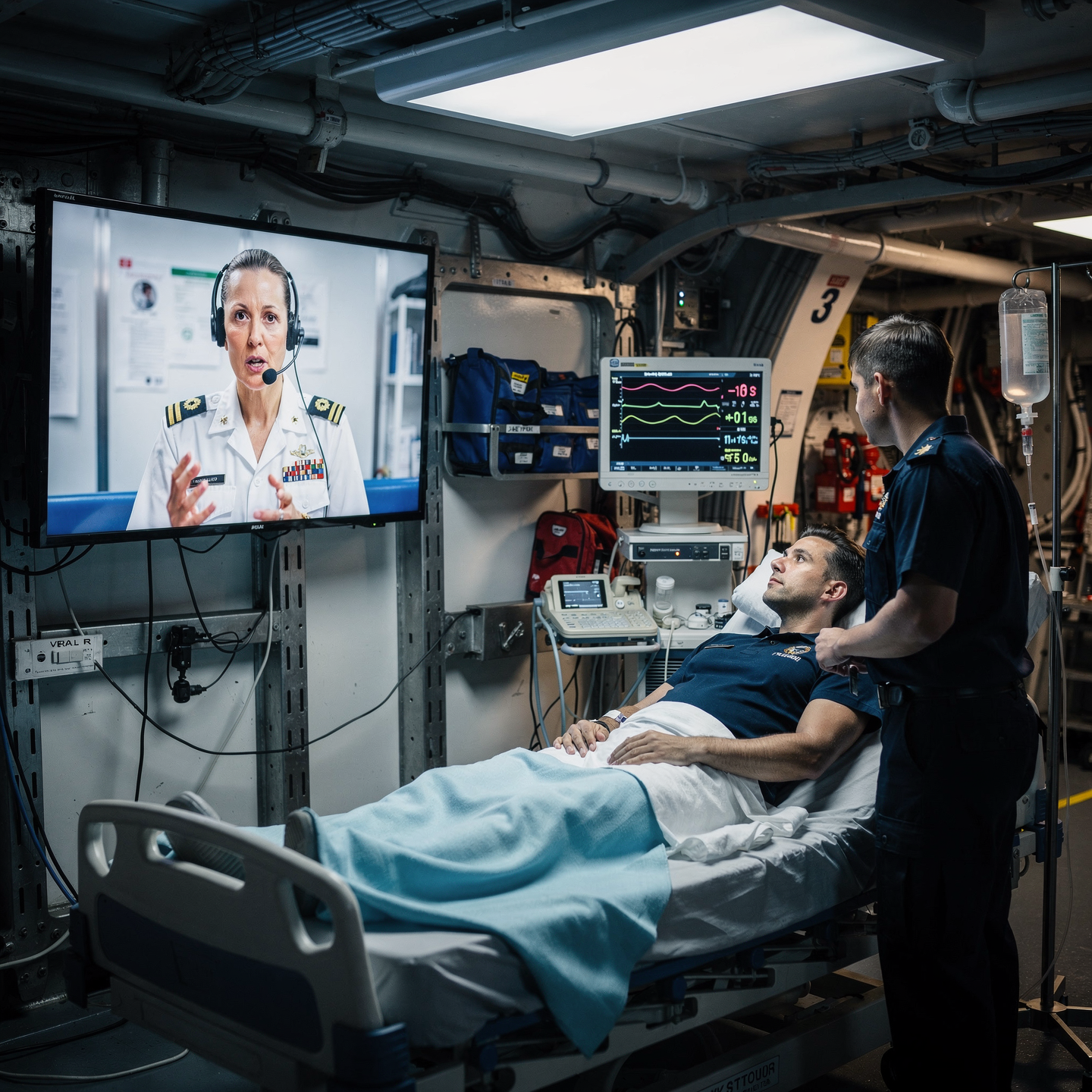
The Master in Naval Telemedicine prepares you to lead the digital transformation of onboard healthcare.
Learn to implement and manage telemedicine solutions in maritime environments, ensuring access to expert medical care at sea. Master the latest technologies in remote diagnostics, patient monitoring, and secure medical communication. This program equips you to optimize medical emergency management and improve crew well-being, while complying with international regulations.
Learn to implement and manage telemedicine solutions in maritime environments, ensuring access to expert medical care on the high seas.
Differential Advantages
- Advanced Remote Diagnosis: Tele-radiology, tele-electrocardiography, and other innovative techniques.
- Maritime Teleconsultation Platforms: Management of specialized software and hardware for remote doctor-patient communication.
- Emergency Management at Sea: Protocols and procedures for critical situations and medical evacuations.
- Legal and Ethical Framework of Naval Telemedicine: Compliance with international regulations and data privacy standards.
- Simulated Practice and Real Cases: Gain practical experience through simulations and case study analysis.
- Modality: Online
- Level: Masters
- Hours: 1600 H
- Start date: 25-08-2026
Availability: 1 in stock
Who is it aimed at?
- Doctors and nurses seeking to specialize in remote healthcare in maritime and remote environments.
- Healthcare professionals interested in the management and coordination of telemedicine services on board ships and offshore platforms.
- Shipping and insurance companies wishing to optimize the medical care of their crews and reduce healthcare costs.
- Biomedical engineers and technicians aspiring to design, implement, and maintain telemedicine systems adapted to the maritime sector.
- Occupational health and safety managers in the maritime sector seeking to improve the management of medical emergencies on board.
Flexibility and Practical Application:
Adapted for professionals with demanding schedules: flexible online format, case studies practical realities and a focus on immediate application in naval environments.
Objectives and skills

Comprehensive management of health on board:
“Implement medical contingency plans tailored to the crew and route, optimizing available resources and telemedicine.”

Implement and monitor telehealth programs:
“Design teleconsultation protocols, train staff in their use, and monitor their adherence and effectiveness.”

Effectively coordinate medical care in remote maritime environments:
Implement standardized communication protocols (e.g., VHF radio, INMARSAT) for teleconsultations and evacuations, prioritizing the clarity and accuracy of the information transmitted to the medical control center.

Mastering information and communication technologies applied to telemedicine:
Implement and manage teleconsultation platforms, remote patient monitoring, and secure storage and transmission systems for clinical data, ensuring interoperability and compliance with data protection regulations.

Leading research and innovation projects in naval telemedicine:
“Define the technological architecture and secure communication protocols for the transmission of critical medical data between ships and land-based reference centers.”

Optimizing the management of naval medical emergencies:
“Implement standardized communication protocols (IMO/NATO) for concise and effective reporting to health authorities and rescue coordination centers.”
Study plan – Modules
- Fundamentals of Naval Telemedicine: Definition, Historical Evolution, and Applicable Regulatory Framework in Maritime Military Environments
- Onboard Technological Infrastructure: Satellite Communication Systems, Data Transmission Protocols, and Redundancy to Ensure Connectivity at Sea
- Advanced Medical Equipment: Portable Devices for Telediagnosis, Remote Vital Signs Monitoring, and Digital Imaging Tools Adapted to Limited Spaces
- Integration of Clinical Information Systems: Interoperability Between Electronic Naval Health Records, Teleconsultation Platforms, and Real-Time Databases
- Remote Medical Care Protocols: Evaluation, Differential Diagnosis, and Management of Medical Emergencies Remotely Through Specialized Teleconsultation
- Security and Privacy in Naval Telemedicine: Data Encryption, Compliance with International Standards for the Protection of Health Information, and Access Management in Closed Networks
- Training and Education of Naval Medical Personnel: Use of Virtual Simulators, Continuous updating in telemedicine techniques and interdisciplinary skills for collaborative work
Optimization of healthcare logistics: drug supply chain, predictive maintenance of medical equipment, and planning of medical evacuations assisted by telemonitoring
Applications of artificial intelligence and predictive analytics: clinical decision support systems, early detection of pathologies, and preventive planning on board
Case studies and field studies: implementation of telemedicine in real missions, analysis of clinical outcomes, and lessons learned for the continuous improvement of naval medical services
Innovative solutions in telesurgery and naval medical robotics: emerging technologies and future perspectives for high-precision interventions in hostile maritime environments
Inter-institutional coordination and international cooperation: joint action protocols with allied forces and civilian agencies in maritime humanitarian medical support operations
Evaluation and quality control in naval telemedicine: performance indicators, Technical and clinical audits, and feedback mechanisms to guarantee excellence in care.
Ethical and legal aspects of naval telemedicine: informed consent, professional responsibility, and the legal framework in the context of military operations on the high seas.
Sustainable development and technological resilience: strategies to minimize environmental impact and ensure the continuous operation of medical systems during maritime conflicts and contingencies.
- Fundamentals and applicable international regulations: comprehensive review of IMCA and STCW regulations and IMO guidelines for medical care in naval environments
- Telemedicine technologies at sea: satellite platforms, VHF/UHF radio communications, data compression protocols for real-time transmission, and artificial intelligence systems for diagnostic support
- Advanced remote patient assessment: implementation of integrated biometric devices, continuous vital sign monitoring, and predictive algorithms for early detection of critical pathologies in isolated conditions
- Differential diagnostic protocols for common clinical emergencies in military maritime environments: systemic approach and adaptation to environmental limitations
- Remote pharmacological management: selection, adjusted dosage, and remote supervised administration of essential medicines and life-support therapies on board
- Tele-assisted therapeutic interventions: advanced first aid techniques, basic and advanced life support, and emergency surgical procedures with expert remote guidance
Integration of portable imaging systems and naval teleradiology for accurate diagnoses and medical evacuation planning
Medical evacuation protocols and logistical coordination: severity criteria, communication with air and naval units, and management of safe routes in conflict zones or adverse weather conditions
Management of electronic medical records in remote environments: security, privacy, interoperability, and military regulatory compliance
Training and simulation of remote clinical scenarios using augmented reality and advanced simulators to strengthen the competencies of naval medical personnel
Ethical and legal considerations in naval telemedicine: informed consent, professional responsibility, and management of adverse incidents
Applied research and development of new protocols: analysis of success stories, technological innovation, and continuous improvement in remote medical care aboard naval units
- Fundamentals of Communications in Maritime Environments: Channels, Frequencies, and Specific Protocols for Naval Missions
- Digital Technologies Applied to Naval Telemedicine: IoT, Biometric Sensors, Remote Monitoring, and Wearable Health Devices
- Integration of Satellite and HF/VHF Communication Systems for Stable Links in Remote Areas and at Sea
- Architecture and Design of Secure Data Networks in Military Maritime Operations
- Specialized Platforms and Software for Remote Patient Management in Naval Environments: Interoperability and Usability
- Protocols for Transmitting Sensitive Medical Data: HIPAA and GDPR Standards, and Consideration of Cryptography in Harsh Environments
- Implementation and Operation of Medical Videoconferencing Systems Under Limited Latency and Bandwidth Conditions
- Teleconsultation and Telemonitoring: Advanced Techniques, Modalities, and Adaptation to Available Naval Resources
- Automation and Use of Artificial Intelligence for Remote Diagnosis and Support for Clinical Decision-Making at Sea
- Technical and Operational Challenges: Electromagnetic Interference, Extreme Environmental Conditions, and System Failure Management
- International Standards and Naval Regulations Governing Communication and Management of Medical Information in Maritime Theaters of Operations
- Training Military Personnel in the Use of Digital Tools and Remote Healthcare Protocols
- Strategies for Interoperability Between Naval Units and Land-Based Healthcare Organizations Through Digital Networks
- Information Security and Cybersecurity in Telemedicine Systems: Prevention of External Threats and Safeguarding Information Integrity
- Implementation of Shipboard Medical Command and Control Centers: Design, Equipment, and Operation in Maritime Military Operations
- Case Studies and Advanced Simulations of Operational Scenarios for the Effective Integration of Digital Solutions in Naval Healthcare
- Cybersecurity Fundamentals Applied to Naval Military Environments: Regulations, International Standards, and Specific Challenges in Naval Telemedicine
- Security Architecture in Telemedicine Platforms: Defense-in-Depth Models, Network Segmentation, Firewalls, and Role-Based Access Control (RBAC)
- Advanced Cryptographic Protocols for the Protection of Clinical Data: Symmetric and Asymmetric Encryption, TLS/SSL, Digital Certificates, and Electronic Signatures
- Identity Management and Multi-Factor Authentication (MFA) in Telemedicine Systems for Secure Access by Authorized Naval Personnel
- Design and Implementation of Robust Data Governance Policies in Naval Environments: Legal Compliance, Privacy, and Confidentiality According to Regulations such as GDPR and HIPAA Adapted to Defense
- Implementation of Continuous Monitoring and Audit Systems to Detect and Mitigate Cyber Threats in Real Time within Telemedicine Networks
-
Cybersecurity incident response and recovery protocols: contingency plans, digital forensics, and maintenance of medical operational continuity in maritime zones
-
Comprehensive clinical data management: capture, storage, interoperability, and secure transmission using HL7, FHIR, and DICOM standards in isolated military environments
-
Advanced configuration and administration of clinical databases in the cloud and on-premises infrastructures: replication, backups, masking, and anonymization
-
Secure integration of connected medical devices (IoMT) into naval telemedicine platforms: communication protocols, vulnerabilities, and updates
-
Cybersecurity risk assessment and specific security audits for critical naval health infrastructure
-
Technical training and awareness for naval personnel on cybersecurity best practices and ethical handling of clinical data
-
Real-world case studies and advanced simulations of cyberattacks
- International legal and regulatory aspects of data protection in telemedicine for naval forces: liability, informed consent, and international transfers
- Emerging technological innovations in cybersecurity and data management to improve the resilience of telemedicine platforms in hostile maritime environments
Naval
- Fundamentals of Telemedicine Applied to Naval Environments: Concepts, History, and Technological Evolution
- Medical Communication Protocols at Sea: Satellite Systems, Radio Frequency, and Interference-Resistant Networks
- Comprehensive Assessment and Management of Medical Emergencies on Remote Naval Platforms: Triage, Classification, and Prioritization of Patients
- Advanced Life Support (ALS): Advanced Cardiopulmonary Resuscitation Techniques, Airway Management, and Use of Specialized Medical Devices in Maritime Environments
- Remote Monitoring of Vital Signs: Secure Acquisition and Transmission of Real-Time Biometric Data
- Medical Crisis Management in Naval Operations: Coordination with Shore Teams, Decision-Making Under Pressure, and Logistical Management of Medical Evacuations
- Specific Emergency Medical Interventions in Extreme Naval Conditions: Drowning, hypothermia, impact trauma, and penetrating wounds.
Implementation and use of emergency kits and state-of-the-art medical equipment on ships and offshore platforms.
Continuous training for medical and non-medical personnel in life support and rapid response techniques.
Legal, ethical, and regulatory aspects of naval telemedicine: confidentiality, informed consent, and professional responsibility in remote interventions.
- Fundamentals of telemedicine in naval environments: definitions, areas of application, and strategic relevance for maritime military health
- Digital systems architecture for naval telemedicine: design, implementation, and maintenance of secure satellite and radio frequency networks
- Standardized protocols for the transmission of medical data in remote maritime areas: HL7, DICOM, and FHIR adapted to naval communications
- Remote monitoring devices and technologies on ships: biometric sensors, fixed and mobile stations, telemetry, and the use of IoT in the fleet
- Teleconsultation and remote diagnosis: interoperable platforms, applied artificial intelligence, and clinical reliability criteria in naval contexts
- Integration of communication systems in the healthcare chain: Inmarsat and VSAT satellite links, HF/VHF radio, and redundancy protocols
- Information security and data protection in naval telemedicine: end-to-end encryption, identity management, and compliance with international military standards
- Logistical and operational management of digital medical resources on ships: inventory, maintenance, upgrades, and technical support at sea
- Training and continuing education of medical and technical personnel: virtual simulators and augmented reality for remote medical procedure training
- Analysis of real-world cases and predictive scenarios: collaborative medical emergency management, telehealth in combat missions, and maritime humanitarian operations
- Fundamentals of Naval Telemedicine: Definition, Scope, and Technological Evolution in Maritime Military Environments
- Architecture of Satellite Communication Systems and Tactical Networks: Integration of HF, VHF, UHF, and IP Data Links for Naval Environments
- Secure Transmission Protocols and Advanced Encryption for Real-Time Protection of Sensitive Data During Naval Operations
- Implementation of Remote Teleconsultation Platforms: Interoperability Between Onboard Medical Units and Shore Bases
- Digital Diagnostic Tools and Onboard Biomedical Devices: Remote Sensors, Multiparameter Monitors, and Portable Ultrasound
- Optimization of Clinical Workflows Using Artificial Intelligence and Machine Learning to Support Remote Medical Decision-Making
- Medical Emergency Management and Digital Triage: Protocols for Rapid Response and Coordination of Medical Evacuation in Hostile Maritime Zones
- Legal and regulatory aspects of naval telemedicine: compliance with military standards, privacy, and international health and defense regulations
- Cybersecurity and perimeter defense strategies in naval medical networks: attack mitigation, intrusion detection, and incident recovery
- Training and education in effective communication and crisis management for medical and operational personnel on naval telemedicine platforms
- Real-time remote monitoring of vital signs and psychophysical status of deployed naval personnel: predictive analytics and early warning
- Integration of electronic health information systems with military and civilian databases for continuity of care and epidemiological analysis
- Optimization of healthcare resources in combat scenarios: telemedicine as a tool for risk reduction and improved operational resilience
- Development and evaluation of quality, audit, and continuous improvement protocols to ensure the effectiveness and safety of telemedicine service delivery
Naval Telemedicine
Case studies and analysis of real and simulated operational scenarios in naval telemedicine: lessons learned and best practices
[l]
- Fundamentals and evolution of artificial intelligence (AI) applied to naval telemedicine: from expert systems to deep learning models
- Design and architecture of intelligent systems for remote maritime environments: integration of biomedical sensors, telemetry, and satellite networks
- Advanced machine learning algorithms for predictive analysis of patients in critical condition: classification, regression, and anomaly detection
- Implementation of deep learning models for assisted diagnosis: recognition of electrocardiographic patterns, medical images, and physiological data in real time
- Processing and analysis of biomedical big data on naval platforms: storage, security, and privacy under international regulations
- AI-based clinical decision support systems: creation of adaptive protocols for medical care in hard-to-reach areas
- Integration of artificial intelligence with portable devices and wearable technology for continuous crew health monitoring naval
- Predictive models for medical resource management and logistical optimization in humanitarian and emergency naval missions
- Application of natural language processing (NLP) techniques for the automatic interpretation of medical reports and communication between onboard personnel and specialized centers
- Technical and ethical challenges in the use of AI in naval environments: responsibility, algorithmic biases, and quality assurance in remote care
- Case studies and advanced simulations: practical implementation of predictive analytics for epidemic control and medical emergencies on ships and isolated naval bases
- Strategies for the continuous training and updating of naval medical personnel in new AI technologies and data analysis for telemedicine
- Fundamentals of digital networks in the naval context: architecture, TCP/IP protocols, and security in military communications
- Implementation of telemedicine systems in maritime environments: design, integration, and deployment on ships and naval bases
- Satellite connectivity infrastructure: characteristics, latency, bandwidth, and optimization for real-time transmission of clinical data
- Secure medical communication protocols: HL7 and DICOM standards, and data encryption to protect sensitive information in naval scenarios
- Remote monitoring of vital signs and connected biomedical devices: interoperability and alarm management on integrated platforms
- Advanced use of mobile and fixed stations for transmitting diagnostic images and remote consultations from units in the area of operations
- Automation and management of clinical data: HIS/PACS systems adapted to the naval structure and their compatibility with the Telemedicine
Artificial intelligence and predictive analytics in naval telemedicine: applications and benefits for decision-making in military operations
Emergency medical protocols and rapid response supported by digital technologies: coordination and communication under extreme conditions
Cybersecurity and risk mitigation in telemedicine platforms: design of policies, standards, and procedures for operational protection
Performance evaluation and preventive maintenance of embarked telemedicine equipment and networks: operational continuity and technological resilience
Integration of telemedicine with naval command and control systems: interoperability and information flows for strategic health support
Training and updating of naval personnel in digital technologies: skills needed to maximize the use of telemedicine systems
Case studies: successful implementation of telemedicine in real naval missions and lessons learned for future operations
International regulations and standards applicable to telemedicine in naval military environments: legal and operational safety compliance
- Introduction to the design and architecture of integrated telemedicine systems applied to the naval environment: functional requirements, military and health regulations, and technical specifications
- Development of secure protocols for real-time medical data transmission: encryption, authentication, integrity, and access management
- Implementation of connected medical devices in naval environments: biomedical sensors, remote monitoring, and compatibility with high-latency satellite networks
- Bandwidth optimization and management of maritime networks: compression techniques, traffic prioritization, and dynamic load balancing to ensure operational continuity
- Integration of artificial intelligence platforms for real-time clinical support: predictive algorithms, medical image analysis, and assistance in emergency onboard diagnosis
- Development of human-machine interfaces adapted to the naval environment: usability, ergonomics, and specific training for medical and non-medical personnel
- Critical Medical Incident Response Procedures in Military Missions: Coordination with Command Centers, Teleconsultations, and Medical Evacuation Management
- Testing, Validation, and Certification of Naval Telemedicine Systems: Functional, Stress, and Simulation Testing Methodologies under Real Maritime Conditions
- Ethical, Legal, and Privacy Aspects of Military Telemedicine: Compliance with GDPR, HIPAA, and Specific National Defense Regulations
- Final Project Planning: Development of Technical Proposals, Timelines, Necessary Resources, and Presentation of Results for Effective Implementation in Naval Units
Career prospects
“`html
- Onboard Physician / Remote Health Coordinator: Medical care at sea, emergency management, and liaison with specialized onshore centers.
- Naval Telemedicine Consultant: Design and implementation of telemedicine solutions for fleets, offshore platforms, and vessels.
- Maritime Health Researcher: Development of new technologies and protocols for remote healthcare in naval environments.
- Naval Telemedicine Project Manager: Planning and supervision of telemedicine system implementation projects on ships and at naval bases.
- Naval Telemedicine Trainer: Training medical and non-medical personnel in the use of telemedicine technologies in maritime environments.
- Telemedicine Systems Interoperability Specialist: Ensuring compatibility and exchange Data security between different telemedicine systems used in the naval sector.
- Data security officer in naval telemedicine: Protection of confidential patient information transmitted through telemedicine systems.
- Naval telemedicine regulatory advisor: Knowledge and application of national and international regulations on telemedicine in the maritime sector.
“`
Entry requirements

Academic/professional profile:
Bachelor’s degree in Nautical Science/Maritime Transport, Naval/Marine Engineering or a related qualification; or proven professional experience on the bridge/in operations.

Language proficiency:
Functional Maritime English (SMCP) recommended for simulations and technical materials.

Documentation:
Updated CV, copy of qualification or seaman’s book, national ID/passport, motivation letter.

Technical requirements (for online):
Device with camera/microphone, stable internet connection, monitor ≥ 24” recommended for ECDIS/Radar-ARPA.
Admissions process and dates

Online
application
(form + documents).

Academic review and interview
Admissions decision

Admissions decision
(+ scholarship offer if applicable).

Place reservation
(deposit) and enrolment.

Induction
(access to the virtual campus, calendars, simulator guides).
Scholarships and financial support
- Digital Transformation in Maritime Health: Master the latest technologies and platforms for remote healthcare in naval environments.
- International Protocols and Regulations: Gain in-depth knowledge of global regulations and standards in telemedicine to ensure safe and effective practice.
- Remote Diagnosis and Treatment: Acquire advanced skills in the use of remote diagnostic tools and in the management of medical emergencies at sea.
- Data Management and Cybersecurity: Learn to protect sensitive patient information and implement security strategies in naval telemedicine.
- Leadership and Team Coordination: Develop the necessary skills to lead and coordinate multidisciplinary teams in naval telemedicine projects.
Testimonials
This Master’s degree in Naval Telemedicine provided me with the tools and knowledge necessary to implement an onboard teleconsultation system, significantly reducing unnecessary medical evacuations and improving crew medical care at sea. Thanks to the training I received, I was able to optimize available medical resources and ensure timely and efficient care in critical situations, positively impacting the health and well-being of my colleagues.
During the Master’s program in Maritime Medicine and Health, my theoretical and practical knowledge was greatly enhanced. I would particularly highlight the simulation of medical emergencies at sea, where the application of protocols and decision-making under pressure allowed me to solidify my skills. Thanks to the training I received, I obtained a position as a doctor with a major cruise line, where I currently work successfully.
This Master’s in Naval Telemedicine provided me with the necessary tools and knowledge to successfully implement an onboard teleconsultation system, reducing unnecessary medical evacuations by 30% and significantly improving the medical care available to the crew during long periods at sea.
The Master’s in Naval Telemedicine provided me with the necessary tools and knowledge to lead the implementation of an onboard teleconsultation system, reducing unnecessary medical evacuations by 30% and significantly improving the healthcare of the crew on extended missions.

Frequently asked questions
Telemedicine, specifically applied to the naval field.
Yes. The itinerary includes ECDIS/Radar-ARPA/BRM with harbor, ocean, fog, storm, and SAR scenarios.
Online with live sessions; hybrid option for simulator/practical placements through agreements.
Recommended functional SMCP. We offer support materials for standard phraseology.
Yes, with a relevant degree or experience in maritime/port operations. The admissions interview will confirm suitability.
Optional (3–6 months) through Companies & Collaborations and the Alumni Network.
Simulator practice (rubrics), defeat plans, SOPs, checklists, micro-tests and applied TFM.
A degree from Navalis Magna University + operational portfolio (tracks, SOPs, reports and KPIs) useful for audits and employment.
- Introduction to the design and architecture of integrated telemedicine systems applied to the naval environment: functional requirements, military and health regulations, and technical specifications
- Development of secure protocols for real-time medical data transmission: encryption, authentication, integrity, and access management
- Implementation of connected medical devices in naval environments: biomedical sensors, remote monitoring, and compatibility with high-latency satellite networks
- Bandwidth optimization and management of maritime networks: compression techniques, traffic prioritization, and dynamic load balancing to ensure operational continuity
- Integration of artificial intelligence platforms for real-time clinical support: predictive algorithms, medical image analysis, and assistance in emergency onboard diagnosis
- Development of human-machine interfaces adapted to the naval environment: usability, ergonomics, and specific training for medical and non-medical personnel
- Critical Medical Incident Response Procedures in Military Missions: Coordination with Command Centers, Teleconsultations, and Medical Evacuation Management
- Testing, Validation, and Certification of Naval Telemedicine Systems: Functional, Stress, and Simulation Testing Methodologies under Real Maritime Conditions
- Ethical, Legal, and Privacy Aspects of Military Telemedicine: Compliance with GDPR, HIPAA, and Specific National Defense Regulations
- Final Project Planning: Development of Technical Proposals, Timelines, Necessary Resources, and Presentation of Results for Effective Implementation in Naval Units
Request information
Complete the Application Form.
Attach your CV/degree certificate (if you have it to hand).
Indicate your preferred cohort (January/May/September) and whether you would like the hybrid option with simulator sessions.
An academic advisor will contact you within 24–48 hours to guide you through the admission process, scholarships, and compatibility with your professional schedule.
Faculty
Eng. Tomás Riera
Full Professor
Eng. Tomás Riera
Full Professor
Eng. Sofía Marquina
Full Professor
Eng. Sofía Marquina
Full Professor
Eng. Javier Bañuls
Full Professor
Eng. Javier Bañuls
Full Professor
Dr. Nuria Llobregat
Full Professor
Dr. Nuria Llobregat
Full Professor
Dr. Pau Ferrer
Full Professor
Dr. Pau Ferrer
Full Professor
Cap. Javier Abaroa (MCA)
Full Professor
Cap. Javier Abaroa (MCA)
Full Professor

