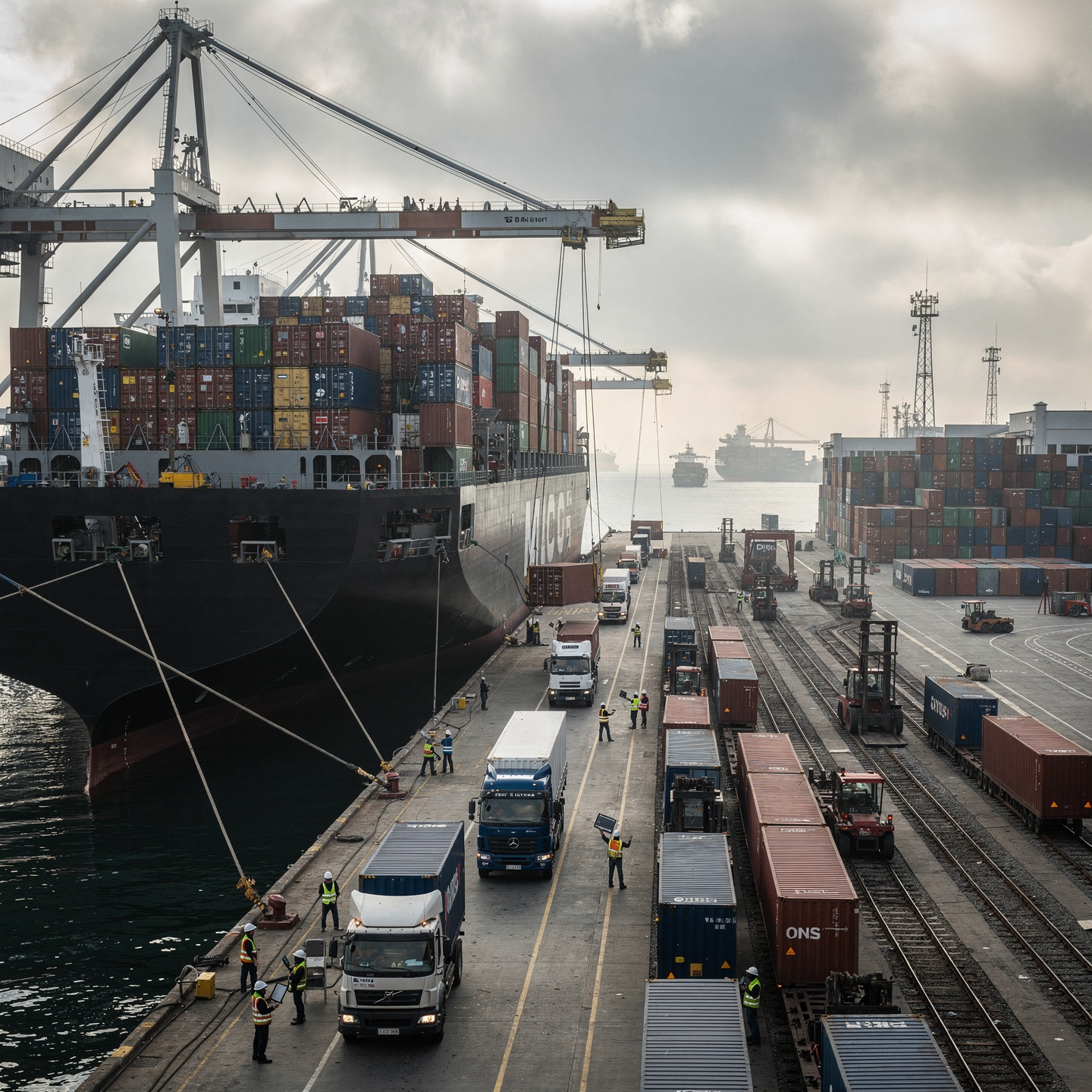
Master’s Degree in Multimodal Transport and Global Trade
Why this master’s programme?
The Master in Multimodal Transport and Global Trade
This program provides you with a comprehensive and strategic overview of international logistics operations and the dynamics of global trade. You will learn to optimize supply chains, manage risks, and capitalize on opportunities in a globalized and constantly evolving environment. This program prepares you to lead complex multimodal transport projects, understand international regulations, and develop expansion strategies in new markets.
Differential Advantages
- Practical Approach: Real-world case studies and simulations to apply knowledge to specific situations.
- Global Vision: Analysis of key markets, trade agreements, and international trade trends.
- Management Tools: Mastery of software and platforms for route optimization, inventory management, and cost control.
- Networking: Networking opportunities with leading professionals and companies in the sector.
- Flexibility: Online format with updated content adaptable to your needs.
- Modality: Online
- Level: Masters
- Hours: 1600 H
- Start date: 26-04-2026
Availability: 1 in stock
Who is it aimed at?
- Logistics and transport professionals looking to lead the management of complex supply chains and optimize international routes.
- Foreign trade specialists who want to deepen their knowledge of customs regulations, Incoterms, and global trade finance.
- Executives and managers who need a strategic vision of multimodal transport to make informed decisions and improve competitiveness.
- Entrepreneurs and consultants interested in developing innovative solutions for the challenges of international trade and sustainable logistics.
- Graduates in Business Administration, Economics, Engineering, or Law seeking a high-value specialization in a constantly growing and transforming sector.
Flexibility for your Development
Adapted for professionals: flexible online methodology, content updated to the latest trends, and networking with industry experts.
Objectives and skills

Optimizing global supply chains:
“Implement robust risk management strategies and contingency plans, considering market volatility and disruptive events.”

Efficiently manage multimodal transport operations:
“Optimize route planning and the selection of transport modes, considering costs, transit times and customs regulations, ensuring cargo traceability.”

Develop expansion strategies in international markets:
“Analyze the macro and microeconomic environment, identifying opportunities and mitigating political, economic, social, technological, legal and environmental risks (PESTLE).”

Mastering international trade legislation and regulations:
“Interpreting INCOTERMS and adapting their application to the commercial transaction.”

Leading digitization projects in logistics and commerce:
“Define and implement digitalization roadmaps, integrating emerging technologies (IoT, AI, blockchain) to optimize the supply chain and improve the customer experience.”

Design and implement innovative and sustainable logistics solutions:
“Optimizing routes through data analysis and emerging technologies, minimizing the carbon footprint and promoting the circular economy.”
Study plan – Modules
- Fundamentals of Logistics Optimization: Principles, Advanced Methodologies, and Applications in Multimodal Environments
- Coordination of Integrated Supply Chains: Design, Structures, and Information Flows in Global Networks
- Mathematical Models and Algorithms for Multimodal Transport Optimization: Linear Programming, Heuristics, and Metaheuristics
- Inventory and Warehouse Management in Multimodal Systems: Control and Synchronization Techniques to Minimize Costs and Time
- Risk Analysis and Management in the Global Supply Chain: Mitigation and Logistics Flow Assurance Strategies
- Digital Tools and Disruptive Technologies: Transportation Management Systems (TMS), Blockchain, IoT, and Big Data Applied to Multimodal Logistics
- Integration of Transport Modes: Maritime, Air, Road, and Rail; Operational coordination and optimization of intermodal transport
Advanced planning and operations control: MES and WMS systems in logistics synchronization and real-time tracking
Optimizing energy performance and sustainability: designing eco-efficient logistics chains and life cycle analysis
Case studies and simulations: applying advanced techniques in real-world multimodal transport and global trade projects
International regulations and standards applied to integrated logistics operations: compliance, documentation, and quality standards
Key performance indicators (KPIs) and balanced scorecards for continuous improvement in multimodal supply chains
Negotiation and collaboration strategies in global logistics networks: strategic alliances and stakeholder management
Current challenges and future trends in logistics optimization and multimodal transport coordination
- Fundamentals and historical evolution of multimodal transport: analysis of global trends and future projections
- Design of integrated logistics chains: optimization of cargo flows, cost reduction, and maximization of operational efficiency
- Advanced intermodal management: coordination between land, sea, air, and rail modes, technological integration, and collaborative models
- Strategic analysis of competitive international trade: economic environment, tariff barriers, trade agreements, and global regulatory policies
- Business models and financing in multimodal transport: risk assessment, financial analysis, and sustainable investment mechanisms
- Advanced logistics planning tools: transport management systems (TMS), ERP software, and digital platforms for real-time visibility
- Applicable international regulations: Incoterms 2020, CMR, CIM, and COTIF conventions, and their practical implications in contracts and operations
- Risk mitigation and assurance strategies in global supply chains: vulnerability analysis and operational contingencies
- Technological innovations in multimodal management: Internet of Things (IoT), blockchain, artificial intelligence, and big data applied to traceability and optimization
- Case studies and international benchmarking: successful implementation of integrated strategies in leading companies in the sector
- Fundamentals of Multimodal Logistics: Definition, Components, and Competitive Advantages
- Technological Innovation in the Supply Chain: IoT, Big Data, Artificial Intelligence, and Blockchain Applied to Logistics Operations
- Design and Optimization of Multimodal Logistics Networks: Analysis of Routes, Modes of Transport, and Strategic Nodes
- Integrated Information Management: TMS (Transportation Management Systems) and WMS (Warehouse Management Systems) for Operational Synchronization
- Energy Efficiency and Sustainability Strategies in Multimodal Transport: Emission Reduction and Use of Renewable Energies
- International Regulations and Quality Standards: ISO 28000, C-TPAT, and Customs Regulations Related to Multimodal Transport
- Risk and Security Analysis in Global Logistics: Identification, Assessment, and Mitigation of Vulnerabilities in Supply Chains
- Cost Management Models and Financial Analysis in Multimodal Transport Projects for ROI Maximization
- Implementation of Competitive Strategies in International Trade: Integrating Logistics with Trade Policies, Bilateral Agreements, and Logistics Blockchains
- Emerging Trends and the Future of Multimodal Transport: Autonomous Vehicles, Advanced Digitalization, and the Circular Economy Applied to Global Trade
- Fundamentals of strategic planning in multimodal networks: objectives, scope, and alignment with the global supply chain
- Design and configuration of logistics hubs: selection criteria, typologies (centralized, decentralized, hybrid), and their impact on operational efficiency
- Advanced transit management models: transit time analysis, intermodal synchronization, and coordination of modes (maritime, land, air, and rail)
- Cargo consolidation techniques: grouping, distribution, and space optimization to maximize capacity and reduce logistics costs
- Specialized tools and software for planning and simulating multimodal networks: GIS, TMS systems, and big data analytics platforms
- Quantitative and qualitative methods for evaluating and optimizing costs in multimodal operations: total cost analysis, cost-benefit models, and industry benchmarking
- Integration of Sustainability in strategic planning: emissions reduction, energy efficiency, and international regulatory compliance
Risk and contingency management in multimodal networks: identification, assessment, and design of contingency plans for operational disruptions
Logistics optimization through the application of supply chain network design techniques: scheduling, allocation, and multimodal routing
Case studies of multimodal network implementation in global trade: analysis of successful chains and lessons learned for strategic decision-making
- Introduction to Digitalization in Multimodal Transport: Fundamentals, Evolution, and Impact on the Global Supply Chain
- Advanced Digital System Architectures: IoT Platforms, Edge Computing, and Cloud Computing Applied to Multimodal Fleet Monitoring and Management
- Intelligent Automation: Collaborative Robotics Technologies, Autonomous Vehicles, and Drones for Optimizing Port and Logistics Operations
- Implementation of blockchain in International Trade: Traceability, Transaction Security, and Smart Contracts for Customs and Certification Processes
- Advanced Big Data Analytics and Machine Learning Systems for Demand Forecasting, Route Optimization, and Proactive Risk Management in Multimodal Transport
- Integration of Interoperable Digital Platforms: EDI, APIs, and International Standards for Information Synchronization Among Logistics Agents, Customs, and Transport Operators
- Digital twins applied to transport: real-time simulation of infrastructure, vehicles, and processes for continuous improvement and strategic decision-making
- Advanced cybersecurity protocols to protect critical infrastructure and sensitive data in the digitalization of transport and global trade
- Sustainable digital transformation strategies: reducing the environmental footprint through clean technologies and energy optimization in multimodal operations
- Analysis of case studies and future trends: impact of artificial intelligence, 5G, and digital twins on the multimodal transport revolution and the facilitation of international trade
- Fundamentals of Multimodal Logistics: Definition, Components, and Competitive Advantages in International Trade
- Modeling and Analysis of Logistics Networks: Applied Graph Theory, Combinatorial Optimization, and Heuristic Algorithms
- Strategic Design of Multimodal Networks: Selection of Transport Modes, Logistics Hubs, and Interconnection Nodes
- Planning and Scheduling of Logistics Flows: Advanced Techniques for Efficient Inventory Management and Multimodal Distribution
- Optimizing Resource Use: Trucks, Trains, Ships, Containers, and Warehousing Based on Cost and Time Criteria
- Simulation and Dynamic Modeling of Logistics Networks: Technological Tools for Anticipating Demand and Minimizing Bottlenecks
- Risk and Contingency Management in Multimodal Networks: Identification, Evaluation, and Mitigation of Impacts on the Global Supply Chain
- Integration of Digital Technologies: IoT, Big Data, and Blockchain for Traceability, real-time monitoring, and operational transparency
International regulations, trade agreements, and their influence on the design and operation of multimodal networks
Case studies and benchmarking: analysis of leading global logistics networks for the application of best practices
- Design and optimization of multimodal logistics networks: analysis of nodes, links, and flows in global supply chains
- Advanced simulation models and scenario analysis for strategic planning in multimodal transport
- Technological integration: Transport Management Systems (TMS), Logistics Information Systems (LIS), and their interoperability in global environments
- Innovation in multimodal transport: application of emerging technologies such as IoT, blockchain, and Big Data to improve traceability and visibility
- Competitive strategies based on market intelligence and comparative analysis of international logistics capabilities
- Optimization of the use of port and rail infrastructure in coordinating operations and reducing operating costs
- Environmental impact assessment and sustainability in logistics networks: route and mode design Efficient transport with low environmental impact
Design and application of key performance indicators (KPIs) for management and continuous improvement in multimodal supply chains
Security and risk management in global transport: international regulations, protocols, and preventative technologies in the supply chain
Case studies and analysis of international studies on innovation and competitive strategies in global trade and multimodal transport
- Fundamentals of Integrated Risk Management: Identification, Analysis, Assessment, and Mitigation in the Context of Multimodal Transport
- International Regulatory Framework and Specific Regulations: SOLAS, IMDG, RID, ADR, CMR, and their Applicability in the Global Logistics Chain
- Design and Implementation of Operational Safety Plans: Protocols for Incident Prevention, Crisis Management, and Contingency Response
- Advanced Risk Assessment Tools: Qualitative and Quantitative Analysis, Predictive Modeling, Risk Matrices, and Specialized Software
- Safety in the Handling and Transport of Dangerous Goods: Classification, Packaging, Labeling, Documentation, and International Regulations
- Integration of IoT Technologies and Real-Time Monitoring Systems for Continuous Supervision and Traceability of Multimodal Cargo
- Cybersecurity Management in Multimodal Transport Platforms: Attack Prevention, Protection of Sensitive Data, and Operational Continuity
- Human and cultural factors in operational safety: training, leadership, effective communication, and human error management
- Vulnerability assessment in logistics infrastructure: ports, terminals, intermodal hubs, and transport corridors
- Implementation of security management systems (SMS) and compliance to ensure competitiveness and trust in global trade
- Methodologies for internal and external audits: preparation, execution, reporting, and follow-up of corrective actions
- Case studies and analysis of real incidents: lessons learned, best practices, and continuous improvement strategies
- Inter-institutional coordination and international cooperation in risk and security management: government agencies, private organizations, and stakeholders
- Innovations and trends in comprehensive security: artificial intelligence, blockchain for supply chains, and autonomous response systems
- Impact of risk and security management on sustainability and corporate social responsibility within the transport sector multimodal
- Fundamentals of strategic planning in multimodal transport: principles, objectives, and scope in global logistics networks
- Logistics hub design: optimal location, types (consolidation, distribution, transshipment), and capacity assessment
- Transit management models and turnaround times: bottleneck analysis, intermodal synchronization, and delay reduction
- Cargo consolidation: techniques, technologies, and the formation of consolidated loads for space optimization and cost reduction
- Cost optimization in multimodal operations: financial analysis, direct and indirect costs, and application of simulation tools
- Integration of information systems and real-time tracking for complete control and visibility of the logistics chain
- Risk management in multimodal networks: identification, mitigation, and contingency plans for disruptions
- International regulations and Applicable standards in the planning and operation of multimodal networks
Key performance indicators (KPIs) for the evaluation and continuous improvement of multimodal hubs and operations
Case studies and benchmarking studies in the design and operation of globally successful multimodal networks
- Project Conceptualization and Delimitation: Objectives, Scope, and Sustainability Criteria in Global Multimodal Transport Networks
- Comprehensive Analysis and Diagnosis of Existing Infrastructure: Ports, Intermodal Terminals, Rail Networks, and Strategic Roads
- Advanced Logistics Chain Modeling: Integration of Management Systems, Simulation Software, and Applied Mathematical Optimization
- Evaluation of Innovative Technologies: Automation, Digitalization, IoT, and Blockchain for Traceability and Operational Efficiency
- Design of Modal Interconnectivity Strategies: Efficient Transfers, Minimized Waiting Times, and Reduced Logistics Costs
- Environmental Impact Analysis: Quantification of Emissions, Carbon Footprint, and Application of Circular Economy Criteria
- Financial and Economic Planning: Cost-Benefit Analysis, Risk Analysis, and Short-, Medium-, and Long-Term Viability
- Optimization of Routes and Trade Flows: Load Allocation and Redistribution Algorithms in dynamic global markets
International and customs regulatory framework: compliance with WTO, CMR, COTIF standards and free trade agreements
Capacity and human resource assessment: talent management, specialized training, and operational safety in multimodal networks
Simulation of future scenarios: resilience to geopolitical crises, economic fluctuations, and technological disruptors
Development of key performance indicators (KPIs): operational, environmental, and financial for project monitoring
Implementation and scalability plan: execution phases, inter-institutional coordination, and communication strategies
Real-time control and monitoring methodologies: use of IoT, Big Data, and early warning systems for proactive management
Preparation of the final report: integration of results, strategic conclusions, and recommendations for executive decision-making
Career prospects
“`html
- Multimodal Logistics Specialist: Design and optimization of integrated supply chains, combining different modes of transport.
- International Trade Manager: Development of strategies for global business expansion, considering customs, regulatory, and market aspects.
- Transport and Trade Consultant: Advising companies on best practices in multimodal transport, cost optimization, and regulatory compliance.
- International Market Analyst: Research and analysis of trends in global trade, identification of opportunities, and risk assessment.
- Transport Operations Manager: Planning, coordination, and supervision of multimodal transport operations, ensuring efficiency and profitability.
- Customs and Trade Regulation Specialist: Management of customs processes, compliance with international regulations, and optimization of Procedures.
- Logistics Infrastructure Project Manager: Participation in the design, planning, and management of multimodal transport infrastructure development projects.
- Executive in Transport and Logistics Companies: Leadership and management of teams in companies within the sector, defining strategies and achieving business objectives.
“`
Entry requirements

Academic/professional profile:
Bachelor’s degree in Nautical Science/Maritime Transport, Naval/Marine Engineering or a related qualification; or proven professional experience on the bridge/in operations.

Language proficiency:
Functional Maritime English (SMCP) recommended for simulations and technical materials.

Documentation:
Updated CV, copy of qualification or seaman’s book, national ID/passport, motivation letter.

Technical requirements (for online):
Device with camera/microphone, stable internet connection, monitor ≥ 24” recommended for ECDIS/Radar-ARPA.
Admissions process and dates

Online
application
(form + documents).

Academic review and interview
Admissions decision

Admissions decision
(+ scholarship offer if applicable).

Place reservation
(deposit) and enrolment.

Induction
(access to the virtual campus, calendars, simulator guides).
Scholarships and financial support
- Comprehensive Vision: Master the keys to multimodal transport, from logistics to customs management.
- Global Trade: Acquire specialized knowledge in international regulations and expansion strategies.
- Networking: Connect with leading professionals in the sector and expand your career opportunities.
- Practical Tools: Apply simulations and real-world case studies to optimize your business decisions.
- Certification: Obtain a qualification that boosts your professional profile in the competitive global market.
Testimonials
This master’s program provided me with the tools and knowledge necessary to optimize my company’s supply chain. I implemented multimodal transport strategies that reduced logistics costs by 15% and delivery times by 10%, opening up new market opportunities internationally.
During the Master’s in Global Transport and Logistics, I developed a route optimization system for an international transport company, reducing its fuel costs by 12% and delivery times by 15%, results that I presented in my thesis and that the company successfully implemented.
This master’s program provided me with the tools and knowledge necessary to optimize my company’s logistics chain. I implemented multimodal transport strategies that reduced costs by 15% and delivery times by 20%, opening up new business opportunities in international markets.
This master’s program provided me with the tools and knowledge necessary to lead the optimization of the logistics chain in my company. Thanks to the training in multimodal transport and global trade, I negotiated a new agreement with international suppliers that reduced transport costs by 15% and delivery times by 10%, positively impacting profitability and customer satisfaction.

Frequently asked questions
Comprehensive management of multimodal transport and its interrelation with international trade.
Yes. The itinerary includes ECDIS/Radar-ARPA/BRM with harbor, ocean, fog, storm, and SAR scenarios.
Online with live sessions; hybrid option for simulator/practical placements through agreements.
Multimodal transport and global trade.
Recommended functional SMCP. We offer support materials for standard phraseology.
Yes, with a relevant degree or experience in maritime/port operations. The admissions interview will confirm suitability.
Optional (3–6 months) through Companies & Collaborations and the Alumni Network.
Simulator practice (rubrics), defeat plans, SOPs, checklists, micro-tests and applied TFM.
A degree from Navalis Magna University + operational portfolio (tracks, SOPs, reports and KPIs) useful for audits and employment.
- Project Conceptualization and Delimitation: Objectives, Scope, and Sustainability Criteria in Global Multimodal Transport Networks
- Comprehensive Analysis and Diagnosis of Existing Infrastructure: Ports, Intermodal Terminals, Rail Networks, and Strategic Roads
- Advanced Logistics Chain Modeling: Integration of Management Systems, Simulation Software, and Applied Mathematical Optimization
- Evaluation of Innovative Technologies: Automation, Digitalization, IoT, and Blockchain for Traceability and Operational Efficiency
- Design of Modal Interconnectivity Strategies: Efficient Transfers, Minimized Waiting Times, and Reduced Logistics Costs
- Environmental Impact Analysis: Quantification of Emissions, Carbon Footprint, and Application of Circular Economy Criteria
- Financial and Economic Planning: Cost-Benefit Analysis, Risk Analysis, and Short-, Medium-, and Long-Term Viability
- Optimization of Routes and Trade Flows: Load Allocation and Redistribution Algorithms in dynamic global markets
International and customs regulatory framework: compliance with WTO, CMR, COTIF standards and free trade agreements
Capacity and human resource assessment: talent management, specialized training, and operational safety in multimodal networks
Simulation of future scenarios: resilience to geopolitical crises, economic fluctuations, and technological disruptors
Development of key performance indicators (KPIs): operational, environmental, and financial for project monitoring
Implementation and scalability plan: execution phases, inter-institutional coordination, and communication strategies
Real-time control and monitoring methodologies: use of IoT, Big Data, and early warning systems for proactive management
Preparation of the final report: integration of results, strategic conclusions, and recommendations for executive decision-making
Request information
Complete the Application Form.
Attach your CV/degree certificate (if you have it to hand).
Indicate your preferred cohort (January/May/September) and whether you would like the hybrid option with simulator sessions.
An academic advisor will contact you within 24–48 hours to guide you through the admission process, scholarships, and compatibility with your professional schedule.
Faculty
Eng. Tomás Riera
Full Professor
Eng. Tomás Riera
Full Professor
Eng. Sofía Marquina
Full Professor
Eng. Sofía Marquina
Full Professor
Eng. Javier Bañuls
Full Professor
Eng. Javier Bañuls
Full Professor
Dr. Nuria Llobregat
Full Professor
Dr. Nuria Llobregat
Full Professor
Dr. Pau Ferrer
Full Professor
Dr. Pau Ferrer
Full Professor
Cap. Javier Abaroa (MCA)
Full Professor
Cap. Javier Abaroa (MCA)
Full Professor

