Master’s Degree in Protection of Critical Port Infrastructure
Why this master’s programme?
The Master’s Degree in Port Critical Infrastructure Protection
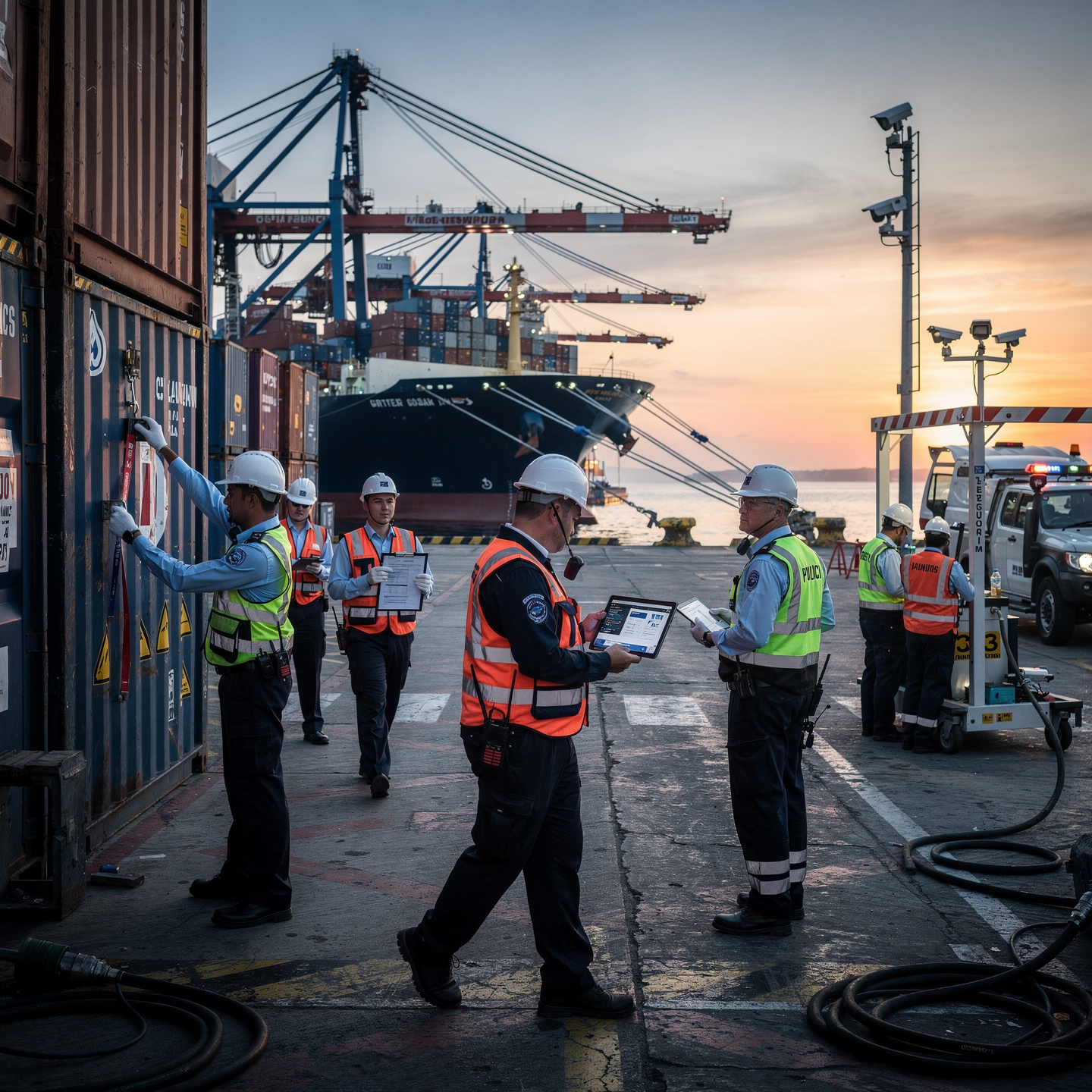
Offers comprehensive training for security management in a key strategic environment. You will learn to identify and assess risks, design and implement effective protection plans, and respond to threats of various kinds, from cyberattacks to physical incidents. This program will provide you with the tools and knowledge necessary to ensure the resilience of port infrastructure in the face of any challenge.
Differential Advantages
- Comprehensive Approach: Addresses the physical, logical, and cybersecurity of port facilities.
- Advanced Risk Analysis: Masters methodologies for identifying and assessing vulnerabilities.
- Strategic Planning: Develops contingency plans and emergency response protocols.
- Legal and Regulatory Framework: Understands the international and national legislation applicable to port security.
- Simulations and Case Studies: Applies acquired knowledge in real and simulated scenarios.
- Modality: Online
- Level: Masters
- Hours: 1600 H
- Start date: 26-04-2026
Availability: 1 in stock
Who is it aimed at?
- Security directors, protection officers, and engineers involved in the security management of ports and maritime terminals.
- Port authority decision-makers seeking to optimize resilience and operational continuity.
- Security consultants and auditors wishing to specialize in the protection of critical port infrastructure.
- Members of state security forces and agencies with responsibility for maritime and port security.
- Maritime and port sector professionals seeking comprehensive training in the latest protection technologies and strategies.
Flexibility and specialization
Adapted to the needs of working professionals: flexible online format, practical approach to real-world cases, and networking with experts in the field sector.
Objectives and skills

Manage and mitigate security risks:
Implement a proactive and reactive security management system (SMS), including vulnerability analysis, contingency plans and regular drills, documenting and continuously updating procedures.

Assess and strengthen port resilience:
Implement emergency response and post-disaster recovery protocols, evaluating their effectiveness through drills and updated risk analysis.

Implement comprehensive cybersecurity strategies:
“Establish a multi-layered security framework (preventive, detective and reactive) adapted to the organization’s assets, managing vulnerabilities and risks through continuous analysis and incident simulations.”

Coordinate the response to emergencies and crises:
“Establish priorities (human life, environment, property), communicate clearly (internally/externally), and execute predefined contingency plans.”

Optimize the physical security of the facilities:
Implement a robust access control plan, including identity verification and visitor registration, complemented by regular surveillance rounds and emergency response protocols.

Apply current port security regulations:
Implement the ISPS Code, conducting risk assessments and protection plans, and coordinating with the designated authorities.
Study plan – Modules
- Conceptual framework for the protection of critical port infrastructure: definition, applicable international and national regulations
- Comprehensive risk assessment: identification of physical and cyber threats, vulnerability analysis, and impact assessment
- Design and application of integrated management strategies: coordination between physical and cybersecurity, definition of policies and procedures
- Physical surveillance and control systems: advanced video surveillance technologies, perimeter detection, biometric access control, and rapid response systems
- Cybersecurity architecture in port environments: network segmentation, secure protocols, intrusion prevention and detection systems (IDS/IPS)
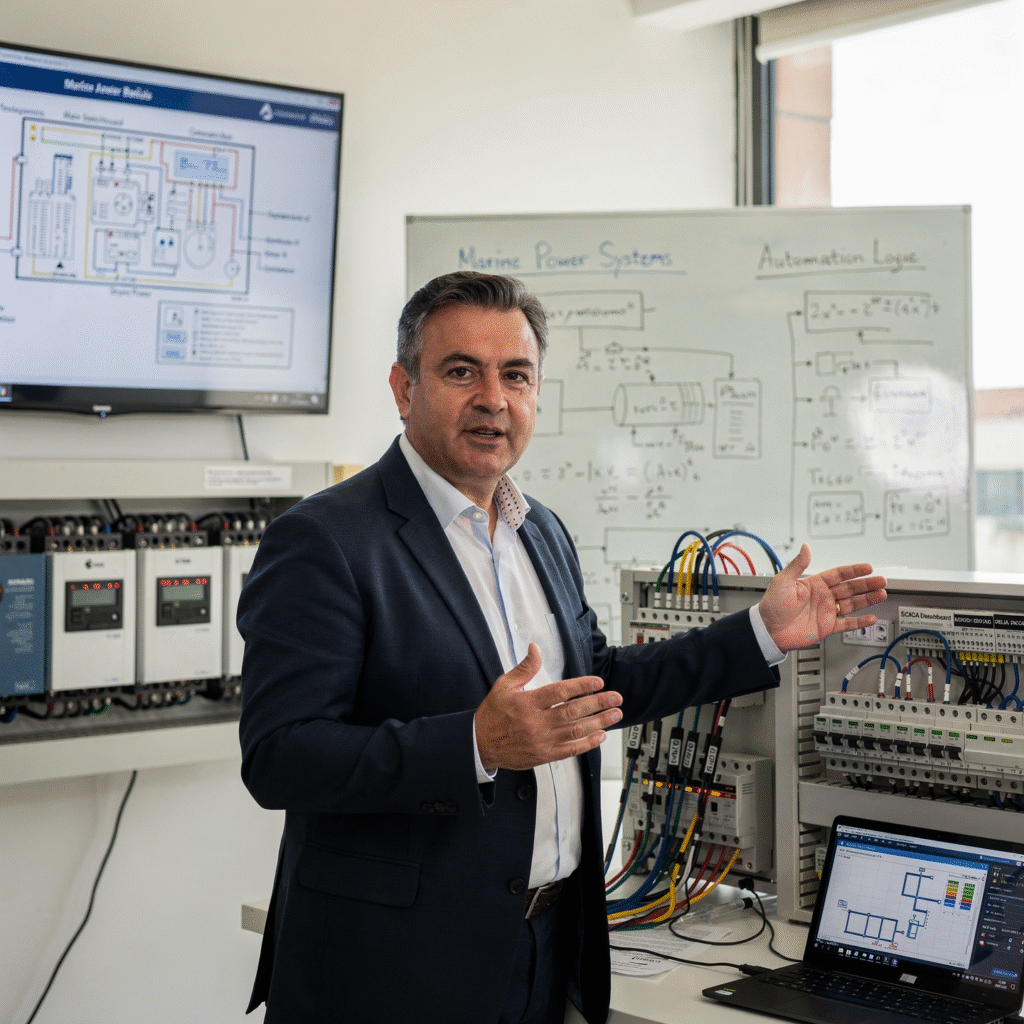
- Integration of SCADA and industrial systems: protection against cyberattacks targeting operational control systems and port automation
- Business continuity and incident recovery plans: development, implementation, and maintenance of failure response protocols or Security gaps
International regulations and technical standards applied: ISO 27001, NIST, IEC 62443, ISPS Code and their impact on integrated management
Staff training and development: development of technical skills, joint drills, and a multidisciplinary security culture
Technological innovation applied to port security: artificial intelligence, predictive analytics, blockchain for data integrity, and automation in alert management
- Conceptual framework of critical port infrastructure: definition, classification, and strategic role in the global logistics chain.
- Threat typologies: analysis of physical, cyber, natural, and human threats specific to port environments (terrorism, sabotage, cyberattacks, industrial accidents).
- Advanced methodologies for vulnerability identification and assessment: qualitative and quantitative risk analysis techniques, asset assessment, and impact modeling.
- Technological tools for threat analysis: real-time monitoring systems, artificial intelligence applied to predictive detection, and integrated risk management platforms.
- Prevention strategies in critical infrastructure: implementation of physical controls, access protocols, video surveillance systems, and perimeter security equipped with IoT technology.
- Cybersecurity models applied to port infrastructure: network segmentation, SCADA vulnerability analysis, protection Against advanced persistent threats (APTs) and applicable international regulations.
Comprehensive incident response planning: development of contingency plans, inter-agency coordination, and establishment of unified command centers.
Simulations and practical response exercises: design and execution of emergency drills, evaluation of response times, and post-event analysis.
Assessment and management of the environmental and operational impact following incidents: protocols for damage minimization and rapid recovery plans for port operational continuity.
Updating regulations and international standards in the protection of critical port infrastructure: compliance with MARPOL, ISPS, NIST Framework, ISO 28000, and specific national and international guidelines.
Human factors and crisis management: leadership in emergency situations, effective communication, and stress management for operational and security personnel.
Innovations and future trends: integration of disruptive technologies such as blockchain for traceability of incidents, drones for aerial surveillance, and digital twins for simulating risk scenarios.
- Introduction to Integrated Protection of Critical Port Infrastructure: Concepts, Scope, and Applicable International Regulations
- Advanced Risk Assessment Methodologies: Quantitative and Qualitative Analysis, Vulnerability Assessment, and Emerging Threats
- Design and Application of Intelligent Video Surveillance and Remote Monitoring Systems for the Early Detection of Incidents and Suspicious Activities
- Implementation of Biometric Access Control Technologies and Multi-Factor Authentication Systems in Critical Port Areas
- Cybersecurity Architecture for the Protection of SCADA Industrial Networks and OT Systems in Port Environments
- Advanced Strategies for the Prevention and Mitigation of Hybrid Attacks: Combinations of Physical and Cyber Threats
- Operational Incident Response Planning: Inter-institutional Coordination, Communication Protocols, and Deployment of Specialized Resources
- Simulation and Training in Complex Crisis Scenarios: Use
- Augmented reality and virtual environments for real-time decision-making
- Integration of artificial intelligence and predictive analytics to anticipate attack vectors and optimize the allocation of security resources
- International regulations and best practice standards: legal compliance, audits, and certifications in critical port security
- Post-incident assessment: evidence gathering, forensic analysis, and development of lessons learned for continuous improvement
- Organizational resilience management: strategies to ensure operational continuity in the face of complex threats and disruptive events
- Fundamentals of strategic intelligence in the port sector: threat analysis, risk identification, and profiling of critical actors.
- Advanced application of digital defense systems: industrial cybersecurity architecture, proactive intrusion detection, and automated response to cyberattacks in port infrastructure.
- Physical and digital access control models: biometric integration, multi-factor authentication systems, and centralized permissions management in complex port environments.
- Implementation of IoT and SCADA technologies for real-time monitoring: secure communication protocols and vulnerability management in distributed sensor networks.
- Operational resilience strategies: design and implementation of contingency plans, disaster recovery, and business continuity in critical scenarios.
- Cyberattack assessment and simulation: penetration testing methodologies specific to port systems, attack vector analysis, and countermeasure development.
Effective.
Comprehensive security incident management: detection protocols, digital forensics, and inter-institutional coordination for rapid restoration of operations.
Regulatory framework and international standards for critical infrastructure protection: compliance with ISPS, NIST, ISO/IEC 27001, and specific guidelines for ports.
Advanced training in physical facility defense: physical surveillance techniques, use of drones, and Automatic Vehicle Identification (AVI) systems applied to port security.
Integration of artificial intelligence and machine learning for risk prediction and mitigation: adaptive algorithms for the early detection of anomalous behavior and emerging threats.
- Fundamentals and architecture of monitoring systems in port infrastructure: IoT sensors, SCADA, and industrial communication networks (Industrial Ethernet, Profinet, Modbus)
- Implementation of advanced technologies: surveillance systems based on machine vision, thermal detection, and multispectral analysis for early threat identification
- Integration and synchronization of real-time early warning systems: interoperability protocols and secure communications in critical infrastructure
- Application of artificial intelligence and machine learning for the predictive analysis of incidents and operational anomalies in port environments
- Design and operation of specialized Command and Control Centers (SOCs) for the continuous monitoring of critical port operations
- Advanced automated rapid response protocols: activation mechanisms, interagency coordination, and resource management in the event of security incidents
- Control and mitigation of cyberattacks targeting industrial control systems (ICS) and specific OT for the port sector
International and national regulations applicable to the comprehensive security and protection of critical maritime infrastructure: compliance, auditing, and certification
Simulation models and virtual training for operational personnel in complex incident scenarios and coordinated attacks
Vulnerability assessment and resilience planning: risk analysis, operational continuity, and real-time recovery strategies
- Advanced Methodologies in Risk Analysis: Identification, Assessment, and Quantification of Specific Threats in Critical Port Infrastructure
- Vulnerability Mapping and Classification: Structural, Technological, Human, and Environmental Analysis to Determine Critical Points
- Predictive Models in Port Security: Simulation of Failure Scenarios and Early Warning Systems with Artificial Intelligence and Machine Learning Techniques
- Impact Assessment of Internal and External Threats: Cyberattacks, Sabotage, Industrial Accidents, Natural Disasters, and Terrorism
- Integrated Prevention Strategies: Design and Implementation of Physical, Electronic, and Procedural Barriers for Risk Mitigation
- Applicable National and International Regulations: Compliance with ISO 31000, NFPA, ISPS Code, and European Maritime Safety Agency (EMSA) Guidelines
- Operational Security Protocols: Management Access control, real-time monitoring via SCADA and CCTV systems, and electromagnetic interference control.
Contingency and operational continuity planning: coordinated procedures between port authorities, security forces, and logistics operators.
Integration of rapid response technologies: use of drones, autonomous robotics, and IoT sensors for inspection and incident response.
Emergency management and coordination: establishment of command and control centers (CMCs), secure communications, and deployment of tactical resources.
Advanced training and comprehensive simulation: training in complex scenarios for operators, security personnel, and authorities using virtual reality and multi-agency exercises.
Audits and continuous improvement: methodologies for post-event evaluation, forensic analysis, and feedback to optimize port security protocols.
Real-world case studies and lessons learned: analysis of critical incidents in international ports for the practical application of strategies and mitigation of future incidents. risks
- International and national regulatory framework applicable to the protection of critical port infrastructure: directives, standards, and physical and cybersecurity protocols
- Comprehensive assessment of threats and vulnerabilities in ports: analysis of physical, cyber, and systemic interdependencies risks
- Design and development of integrated security plans: protocols for the prevention, detection, and response to physical and cyber incidents
- Implementation of advanced monitoring and control technologies: video surveillance systems, biometric access control, IoT sensors, and secure SCADA
- Cybersecurity architectures specific to port environments: network segmentation, specialized firewalls, intrusion detection, and vulnerability management
- Crisis management and business continuity: strategic resilience planning to minimize the impact of disruptive incidents
- Integration of multidisciplinary teams in security management: coordination between operators, security forces, and port regulatory bodies
- Ongoing auditing and evaluation of security systems: key performance indicators (KPIs), drills, and coordinated response exercises
- Innovations in artificial intelligence and machine learning applied to the prevention and detection of complex threats in critical infrastructure
- Legal and ethical aspects of data management and privacy during the monitoring and protection of port infrastructure
- Introduction to Critical Port Infrastructure: Definitions, Classifications, and Specific Vulnerabilities in the Port Environment
- Technological Innovations in Physical Defense Systems: Smart Sensors, Surveillance Drones, and Advanced Perimeter Detection Systems
- Industrial Cybersecurity Architecture and Components (ICS/SCADA) Applied to Critical Port Management
- Protection and Mitigation Protocols Against Cyberattacks: Defense Strategies, Network Segmentation, and Secure Privileged Access
- Implementation of Artificial Intelligence and Machine Learning for Real-Time Monitoring and Predictive Threat Analysis
- Integration of Multifactorial Defense Systems: Analysis of Combined Risks Between Physical and Cyberattacks
- National and International Regulations Applicable to the Technological Protection of Critical Port Infrastructure
- Advanced Simulation and Incident Response Scenarios: Use of Virtual environments and augmented reality for training and operational testing
Technical evaluation and auditing of defensive systems: metrics, key performance indicators (KPIs), and security standards
Emerging trends in disruptive technologies for port security: blockchain, quantum technologies, and secure communications
Real-world case studies of attacks targeting port infrastructure and detailed analysis of the implemented technological response
Comprehensive business continuity planning with a focus on technological defense and recovery from cyber and physical disasters
- Fundamentals of comprehensive port infrastructure protection: analysis of physical and cyber threats in critical port environments, identification of risk vectors, and assessment of specific vulnerabilities.
- Design and implementation of advanced physical security systems: video surveillance technologies, biometric access control, intelligent perimeter barriers, and automated patrolling.
- Cybersecurity architectures for critical ports: design of segmented networks, defense-in-depth protocols, identity and access management (IAM), and communication encryption.
- Implementation of international security policies and standards, including ISPS, NIST, and ISO 27001 regulations, adapted to the port context.
- Real-time monitoring and analysis: integration of SCADA systems, IoT sensors, and SIEM platforms for early incident detection and digital forensics.
- Comprehensive Incident Management Models: Coordinated responses to physical and cybersecurity breaches, contingency plans, and simulation exercises.
- Operational Resilience and Business Continuity: Impact assessment, disaster recovery, and redundancy and diversification strategies for critical resources.
- Threat Intelligence and Public-Private Cooperation: Information sharing, early warnings, and the development of strategic alliances for joint protection.
- Application of Emerging Technologies: Use of artificial intelligence, machine learning, and blockchain to improve security and traceability in port infrastructure.
- Case Studies and Field Studies: In-depth analysis of real-world incidents, security audits, and implementation of improvements based on global experiences.
- Definition and scope of the Integrated Project: objectives, goals, and expected results in the protection of critical port infrastructure
- Advanced analysis of risks and threats: methodologies for the identification, evaluation, and prioritization of specific vulnerabilities in the port environment
- Design of physical and technological security strategies: integration of surveillance systems, access control, and emerging technologies for perimeter and operational protection
- Implementation of operational resilience systems: protocols for continuity, recovery, and adaptation to natural disasters, cyberattacks, and sabotage
- Detailed study of applicable international and local regulations: ISPS Code, MARSEC Levels, International Maritime Organization guidelines, and national regulations
- Development of a comprehensive crisis management model: coordination Interinstitutional collaboration, effective communication, and decision-making in port emergency situations
Application of advanced technologies for real-time monitoring: use of IoT, Big Data, artificial intelligence, and predictive analytics to detect and anticipate threats
Development and simulation of response and mitigation plans: practical exercises of real-world scenarios and multiple contingencies in port environments
Integration of sustainability and environmental protection criteria in the design of infrastructure and security protocols
Evaluation and presentation of the Final Project: presentations, technical defenses, and the generation of executive reports with strategic recommendations
Career prospects
“`html
- Port Security Specialist: Design and implementation of physical and cybersecurity measures in port infrastructure.
- Risk Manager: Risk assessment and mitigation in critical port infrastructure.
- Port Security Consultant: Advising companies and public bodies on the protection of critical infrastructure.
- Port Terminal Security Manager: Security management in container, bulk, and other terminals.
- Port Security Auditor: Verification of compliance with regulations and security standards in port infrastructure.
- Port Security Intelligence Analyst: Collection and analysis of information for threat prevention in port infrastructure.
- Security Incident Investigator Port security: Incident analysis and proposal of corrective measures.
Port security trainer: Delivery of courses and workshops on the protection of critical port infrastructure.
“`
Entry requirements

Academic/professional profile:
Bachelor’s degree in Nautical Science/Maritime Transport, Naval/Marine Engineering or a related qualification; or proven professional experience on the bridge/in operations.

Language proficiency:
Functional Maritime English (SMCP) recommended for simulations and technical materials.

Documentation:
Updated CV, copy of qualification or seaman’s book, national ID/passport, motivation letter.

Technical requirements (for online):
Device with camera/microphone, stable internet connection, monitor ≥ 24” recommended for ECDIS/Radar-ARPA.
Admissions process and dates

Online
application
(form + documents).

Academic review and interview
Admissions decision

Admissions decision
(+ scholarship offer if applicable).

Place reservation
(deposit) and enrolment.

Induction
(access to the virtual campus, calendars, simulator guides).
Scholarships and financial support
- Risk Analysis: Learn to identify and assess potential threats in critical port environments.
- Comprehensive Security: Master physical, cyber, and human protection strategies for port infrastructure.
- Legislation and Regulations: Understand the legal framework and international regulations applicable to port security.
- Contingency Planning: Develop effective response plans for emergencies and crises in the port sector.
- Security Technologies: Familiarize yourself with the latest technological innovations for the protection of critical infrastructure.
Testimonials
This master’s degree provided me with the tools and knowledge necessary to become Head of Security at the Port of Valencia. I implemented a new access control system based on risk analysis, reducing security incidents by 30% in the first year.
I applied the knowledge from my master’s degree in naval cybersecurity to develop an intrusion detection system that reduced false alerts on my unit’s network by 80%, improving the efficiency and security of our communications.
I implemented an AI-based intrusion detection system at the Port of Rotterdam, reducing security incidents by 60% and optimizing threat response times by 40%.
I applied the knowledge from the master’s program to design a comprehensive security system for the port of Algeciras, which reduced security incidents by 30% in the first year of implementation, optimizing resources and improving operational efficiency.

Frequently asked questions
Port infrastructure.
Yes. The itinerary includes ECDIS/Radar-ARPA/BRM with harbor, ocean, fog, storm, and SAR scenarios.
Online with live sessions; hybrid option for simulator/practical placements through agreements.
Port and maritime sector.
Recommended functional SMCP. We offer support materials for standard phraseology.
Yes, with a relevant degree or experience in maritime/port operations. The admissions interview will confirm suitability.
Optional (3–6 months) through Companies & Collaborations and the Alumni Network.
Simulator practice (rubrics), defeat plans, SOPs, checklists, micro-tests and applied TFM.
A degree from Navalis Magna University + operational portfolio (tracks, SOPs, reports and KPIs) useful for audits and employment.
- Definition and scope of the Integrated Project: objectives, goals, and expected results in the protection of critical port infrastructure
- Advanced analysis of risks and threats: methodologies for the identification, evaluation, and prioritization of specific vulnerabilities in the port environment
- Design of physical and technological security strategies: integration of surveillance systems, access control, and emerging technologies for perimeter and operational protection
- Implementation of operational resilience systems: protocols for continuity, recovery, and adaptation to natural disasters, cyberattacks, and sabotage
- Detailed study of applicable international and local regulations: ISPS Code, MARSEC Levels, International Maritime Organization guidelines, and national regulations
- Development of a comprehensive crisis management model: coordination Interinstitutional collaboration, effective communication, and decision-making in port emergency situations
Application of advanced technologies for real-time monitoring: use of IoT, Big Data, artificial intelligence, and predictive analytics to detect and anticipate threats
Development and simulation of response and mitigation plans: practical exercises of real-world scenarios and multiple contingencies in port environments
Integration of sustainability and environmental protection criteria in the design of infrastructure and security protocols
Evaluation and presentation of the Final Project: presentations, technical defenses, and the generation of executive reports with strategic recommendations
Request information
Complete the Application Form.
Attach your CV/degree certificate (if you have it to hand).
Indicate your preferred cohort (January/May/September) and whether you would like the hybrid option with simulator sessions.
An academic advisor will contact you within 24–48 hours to guide you through the admission process, scholarships, and compatibility with your professional schedule.
Faculty
Eng. Tomás Riera
Full Professor
Eng. Tomás Riera
Full Professor
Eng. Sofía Marquina
Full Professor
Eng. Sofía Marquina
Full Professor
Eng. Javier Bañuls
Full Professor
Eng. Javier Bañuls
Full Professor
Dr. Nuria Llobregat
Full Professor
Dr. Nuria Llobregat
Full Professor
Dr. Pau Ferrer
Full Professor
Dr. Pau Ferrer
Full Professor
Cap. Javier Abaroa (MCA)
Full Professor
Cap. Javier Abaroa (MCA)
Full Professor